

Tumor protein p53, a nuclear protein, plays an essential role in the regulation of cell cycle, specifically in the transition from G0 to G1. It is found in very low levels in normal cells, however, in a variety of transformed cell lines, it is expressed in high amounts, and believed to contribute to transformation and malignancy. p53 is a DNA-binding protein containing DNA-binding, oligomerization and transcription activation domains.
Western

Western blot analysis of Phospho-p53 (Ser15) in HeLa treated with HU lysates using Phospho-p53 (Ser15) antibody.The lane on the right is blocked with the Phospho- peptide.
Immunohistochemistry
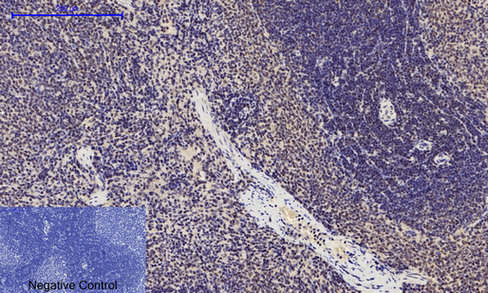
Immunohistochemistry analysis of paraffin-embedded rat spleen tissue using Phospho-p53 (Ser15) antibody.High-pressure and temperature Sodium Citrate pH 6.0 was used for antigen retrieval.
Immunofluorescence
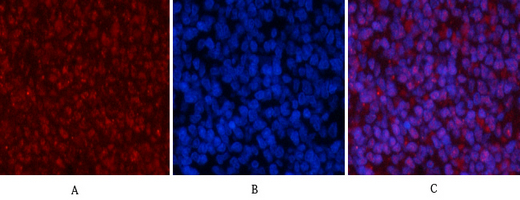
Immunofluorescence analysis of Phospho-p53 (Ser15) in rat spleen tissue using antibody.
Western
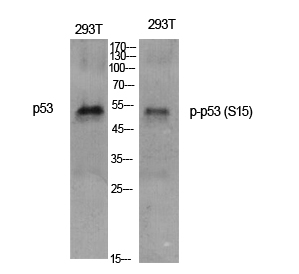
Western blot analysis of Phospho-p53 (Ser15) in untreated and Phospho-p53 (Ser15) treated with HU in 293T lysates using Phospho-p53 (Ser15) antibody


